
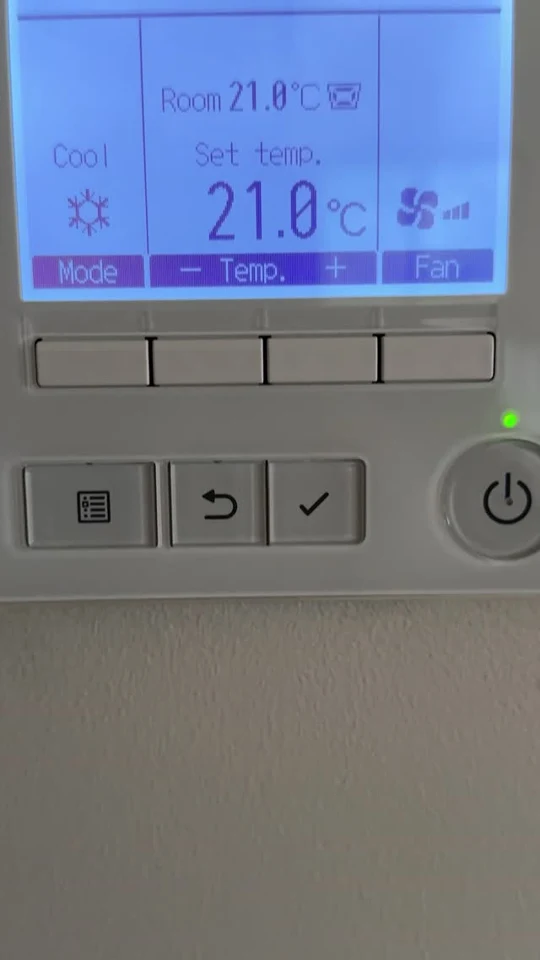
If the living area feels comfortable but a bedroom stays warm, record what is happening before changing every zone setting. A useful assessment considers the room, controls and air distribution together.
Make a room-by-room record
Note which rooms are affected, when discomfort starts and which zones are selected. Include whether the problem is new or has existed since installation. Record the controller setting and how doors are normally used, rather than changing several conditions before the visit.
A rough floor plan helps explain the issue. Mark the rooms, outlets and return-air grille you can see without entering the ceiling space. Add the times each room is occupied and any recent change, such as a renovated room or new furniture arrangement.
Airflow control and temperature sensing are different
A zoning controller can direct air to selected areas. Depending on the equipment, it may control airflow percentages, use room temperature sensors or combine these functions. AirTouch’s guidance distinguishes airflow-based control from temperature-based zoning with compatible sensors.
A zone name on a screen does not by itself prove that room has its own temperature sensor. Ask which functions are fitted to your system and how the controller should be used with its duct design.
Ask about the system’s operating requirements
Do not assume that closing almost every zone is suitable. Have the installer explain any minimum airflow, common-zone or spill-zone requirements for the design. The correct approach depends on the installed equipment and controls.
A room comfort problem should not be met with an instruction to keep reducing airflow everywhere else without understanding those requirements. Ask for a clear operating explanation you can use during normal household routines.
Safe observations that help a service visit
- Photograph the selected zones and controller display.
- Check that furniture is not obstructing accessible outlets or the return-air area.
- Look for a displayed fault message and record it.
- Tell the technician when the filter was last checked.
- Explain whether the issue changes with the time of day.
Leave ceiling access, damper adjustments, duct alterations and internal equipment checks to the appropriate professional. Do not climb into a roof space or close off grilles as an experiment.
What should an assessment explain?
Ask whether the findings relate to controls, maintenance, air distribution or the original system design, and what evidence supports the recommendation. A new controller alone should not be presented as a guaranteed solution without checking compatibility and the cause of the complaint.
MyTradie can discuss the installed system and the rooms that matter most to your household. Bring the model details, controller name and room-use record to make the conversation more useful.