
Retrospective planning guide — December 2025. Newly prepared and published on 1 November 2026 for this earlier planning period. The archive date is not evidence of an earlier publication. Period sources are listed below; confirm current products, terms and site requirements before acting.
For a managed property near the Gold Coast, coastal exposure belongs in the service conversation rather than in a vague promise that equipment is “coast-proof”. A December 2025 planning brief could use existing records and safe observations to ask better questions about condition and maintenance. This guide helps property managers and owners organise that discussion without prescribing coatings, washing methods or repair work.
Planning a real job? Contact MyTradie for a practical scope review and quotation discussion.
Describe the location more accurately than “near the beach”
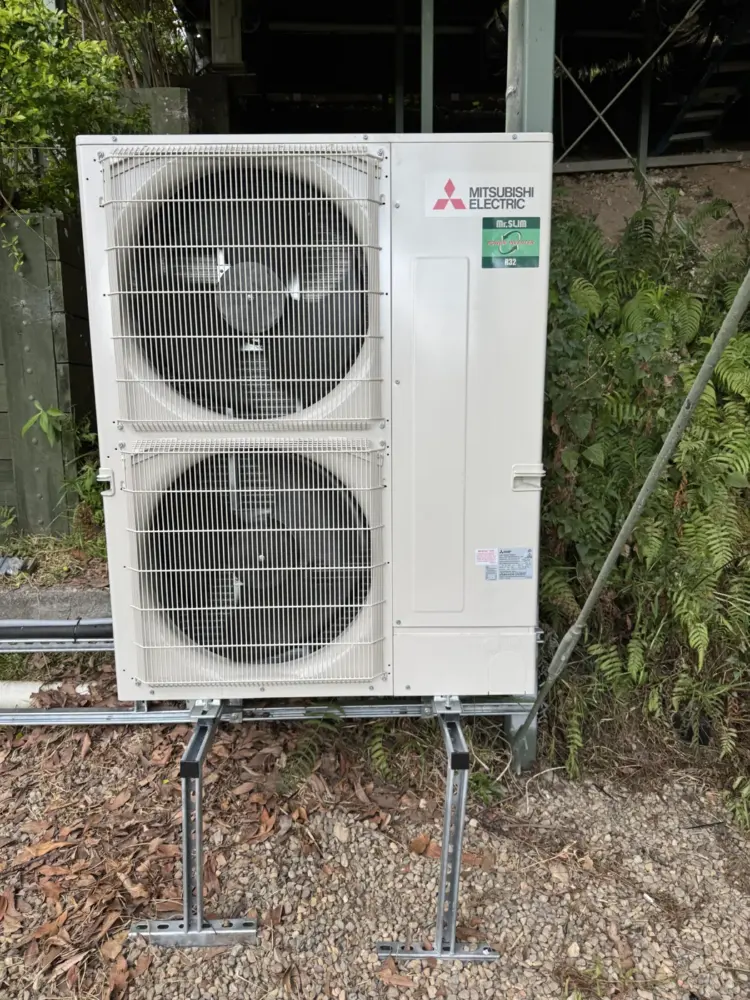
Record the property location, equipment position and the surroundings visible from a safe position. Note whether the unit faces an exposed open area or sits in a more sheltered part of the property. Include safely taken photographs that show the context, while avoiding claims about the level of corrosion from a distant image.
The purpose is to give the professional team relevant site information. Distance from the shoreline alone does not establish a universal maintenance interval or equipment lifespan. Do not borrow a neighbouring property’s service schedule without considering the actual equipment, exposure, use and manufacturer guidance.
Keep model information and previous advice together
Find the installed indoor and outdoor model details, manuals, service history and any written advice supplied at installation. If a protective treatment was previously applied, retain the product and application records rather than describing it simply as “rust proofing”. Ask the provider to confirm what was approved and what ongoing care was recommended.
Do not assume that an aftermarket coating is suitable for every surface or system. The property manager’s role is to preserve the evidence and seek model-specific advice. A sales description is not a substitute for the actual treatment specification, manufacturer compatibility information or an assessment of present condition.
Separate safe observations from technical inspection
An occupant or manager can report a changed noise, visible damage, water leakage or an obstruction without touching the equipment. Record the date and the circumstances. Avoid asking someone to remove guards, scrape a corroded surface, reach into a fan or access a roof merely to complete a checklist.
Technical inspection and any decision about repairability belong to appropriately qualified people. The earlier maintenance guidance used for this retrospective article supports condition records and planned follow-up. It does not turn a visual walk-around into a structural, electrical or refrigerant-system assessment.
Make the next step specific. Ask our team about the relevant service, or call 0402 155 761 with the property suburb, equipment details and your proposed timing.
Ask for a site-specific maintenance proposal
Provide the contractor with the equipment list and exposure information, then ask for the recommended scope and the reasons for it. Clarify which tasks are routine owner care, which are professional maintenance and which are a separate repair. The proposal should refer to the actual equipment and instructions, not only a generic coastal-service label.
Be cautious about universal washing advice. Water, cleaners, pressure and access can create risks when used incorrectly. Do not instruct a tenant to hose equipment or apply chemicals because another brand’s guide mentioned cleaning. Ask the relevant professional to explain the permitted method and any work that should be left to a technician.
Preserve airflow and future access in property planning
Landscaping, screens and storage can change the surroundings of an outdoor unit after installation. Record proposed changes and ask whether they affect the equipment’s required clearances or service access. A decorative enclosure should not be treated as harmless simply because it improves the appearance from a balcony.
Use the equipment instructions and a professional assessment to resolve the arrangement. Do not specify a universal gap from this article or remove protective building elements without advice. The practical goal is to avoid a property improvement creating an unrecognised access or airflow problem for the installed system.
Compare repair and replacement with evidence
If deterioration is reported, request a description of the affected components, the proposed work and any limitations. Separate a cosmetic concern from a documented functional or safety issue. A replacement decision should consider condition, availability of suitable parts, the property requirements and the total installation scope, rather than age or appearance alone.
Record the assumptions used in quotations. A new location, changed supports or additional building work can make two proposals materially different. Do not promise that replacement will last a fixed number of years in every coastal setting. The useful result is an informed decision with its uncertainties visible.
Maintain a simple review cycle for the portfolio
After each professional visit, link the report to the asset register and assign follow-up actions. Review whether the recorded equipment position, access and landscaping still match the site. If a property changes manager, hand over the care instructions and outstanding recommendations along with the invoices.
An illustrative coastal portfolio might reveal that one site needs an earlier assessment because its condition history differs from the others. That is a reason to prioritise discussion, not to announce a diagnosis from a spreadsheet. Consistent records make it easier to organise the right visit and explain the resulting recommendation to the owner.
Your working checklist
- Document the equipment location and observed exposure context.
- Retain manuals, service reports and any approved treatment records.
- Keep owner observations separate from professional findings.
- Review proposed screens, landscaping and access changes with the installer.
- Assign follow-up decisions and avoid fixed lifespan or savings promises.
A question worth asking
Should all coastal systems receive the same protective treatment?
No universal treatment is prescribed here. Suitability depends on the equipment, location and manufacturer requirements. Ask an appropriately qualified provider to explain the proposed product or method, its limitations and any ongoing maintenance before authorising work.
Period sources and further reading
These references support the technical background. The planning examples and checklists are illustrative, not records of completed customer projects.