
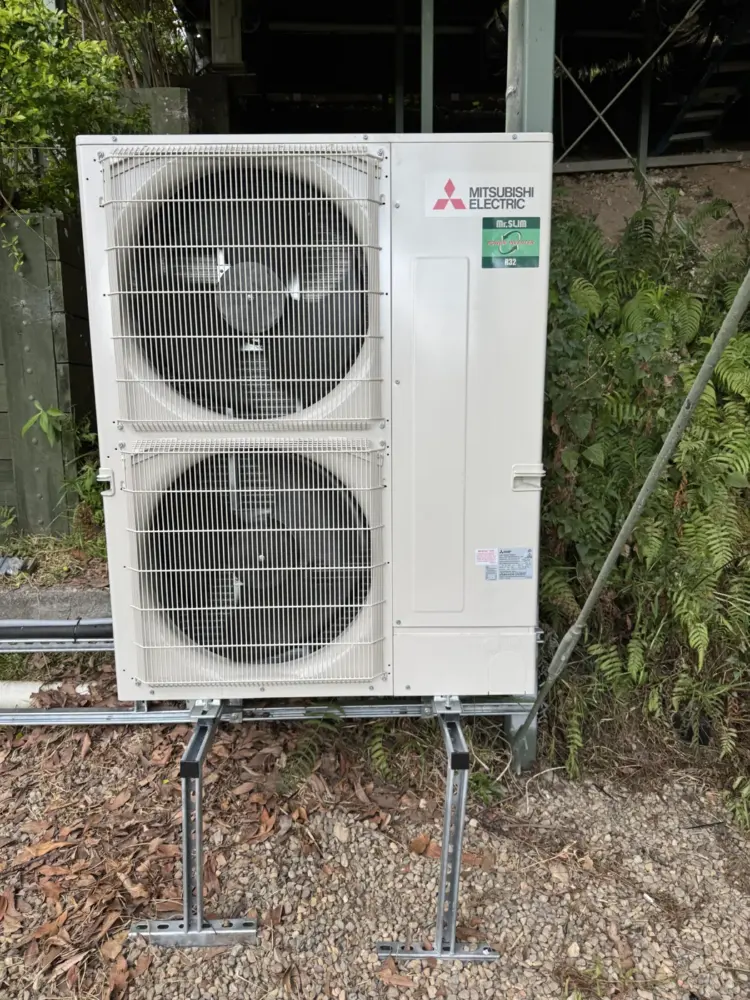
After a storm, the first question is whether the property and equipment are safe to use. A cooling problem can wait until electrical damage and water exposure have been assessed. Do not start by repeatedly resetting the air conditioner.
Check for damage from a safe location
Stay away from fallen powerlines, damaged electrical equipment and floodwater. Energex warns against using electrical appliances while standing in water and advises professional inspection of flood-damaged equipment and wiring before reconnection.
Do not enter a wet or damaged area to reach a controller, isolator or switchboard. Do not assume solar equipment becomes safe simply because the grid supply is out. Follow the current advice from your electricity network and emergency authorities.
Water-damaged air conditioning needs electrical assessment
Queensland’s Electrical Safety Office specifically identifies hard-wired appliances such as air conditioning units as equipment that should be checked by a licensed electrician after water damage if intended for reuse. A normal-looking display does not establish electrical safety.
Tell the person arranging the inspection if the outdoor unit, indoor unit, wiring or surrounding area was affected by water or impact. Do not remove covers to look for damage yourself.
If there is no sign of storm damage
Check the network’s outage information before treating a loss of power as an air conditioning fault. Once the supply and equipment are safe to use, follow the manufacturer’s model-specific operating instructions. Record any displayed error before changing settings.
If protection repeatedly trips, stop and obtain professional advice. Do not bypass a safety device or continue resetting it in an attempt to restore cooling. Explain whether the whole property lost power or only the air conditioning stopped.
Prepare a useful incident record
- When did the outage or storm-related interruption occur?
- Was water or physical damage observed?
- Which parts of the property are affected?
- What does the controller show now?
- Has an electrician or the electricity network already assessed anything?
Use photographs only where you can take them safely. Keep any inspection notes, outage information and equipment model details together. This can help avoid duplicated visits and clarify which trade needs to attend first.
Separate reconnection safety from HVAC fault finding
Electrical safety assessment and air conditioning diagnosis are related but different tasks. Describe any known safety concern when contacting MyTradie so the appropriate next step can be discussed. Do not request a normal cooling restart as a substitute for checking storm-damaged equipment.
For Brisbane and Gold Coast properties, we can discuss air conditioning fault finding once the relevant safety and access requirements are clear. Network emergencies should be reported through the electricity network’s emergency channels.