
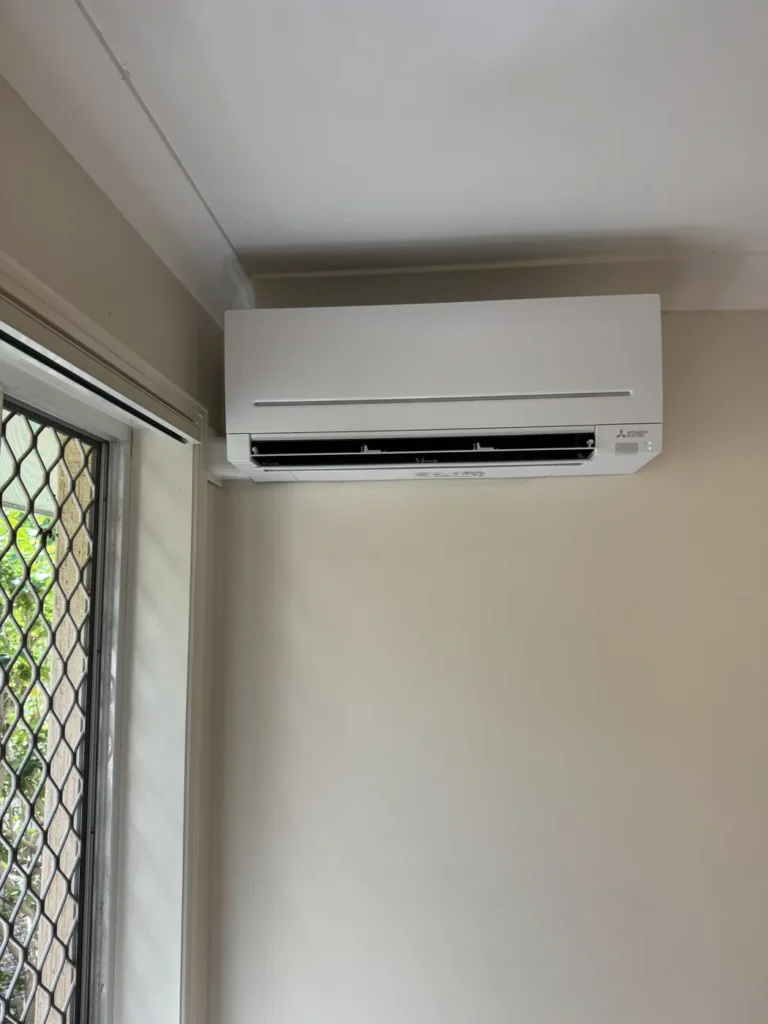
A room can feel uncomfortable because it is hot, humid or both. That is why changing the mode can be more useful than repeatedly lowering the temperature. Start with how the room feels and the functions your particular air conditioner provides.
Cool mode: when temperature is the main issue
Cooling operation aims to bring the room towards the selected temperature. On a hot afternoon, this is usually the mode to understand first. Make sure the controller is actually showing cooling and check whether a timer or other selected setting is affecting operation.
Use blinds or shading to limit direct sun and avoid leaving outside doors open while cooling. Consider comfort at a moderate setting before choosing a much lower target. The Australian Government’s seasonal guidance suggests adjusting cooling settings and conditioning only the spaces being used.
Dry mode: when the room feels sticky
Dry mode is intended to reduce moisture, although the control method and available temperature adjustments vary by model. Daikin explains that cooling and dry operation use condensation, with dry mode suited to humid, sticky conditions. It is not a universal substitute for strong cooling on a very hot day.
Read the model’s operating instructions before deciding which settings are available. Some controllers restrict the temperature adjustment in dry mode. Do not assume a droplet symbol behaves identically across every brand or generation.
Fan mode: understand what it is doing
Fan-only operation moves air without the normal refrigerated cooling function. Check this first if the unit appears to run but does not provide the cooling you expected. A fan symbol can easily be mistaken for the fan-speed adjustment within another mode.
If you are unsure, photograph the controller display and look up the exact controller or indoor-unit manual. A general online diagram may not match your remote, particularly where a replacement or third-party controller has been fitted.
A practical way to review your settings
- Identify whether heat or humidity is the main discomfort.
- Select the relevant mode using your manual.
- Check the timer, occupied rooms and open external doors.
- Note the setting and how the room responds during normal use.
- If operation seems abnormal, record the symptoms before requesting advice.
Change one setting at a time so you can explain what helped. If you want to compare electricity use, use actual monitoring data and consider differences in weather and occupancy. Do not assume that one mode guarantees a fixed percentage saving.
When changing the mode is not enough
Persistent poor comfort, indoor water leaks, unusual smells or a flashing fault indicator deserve attention rather than endless setting changes. Tell MyTradie whether the problem is new and which modes you tried. We help Brisbane and Gold Coast customers understand their controls and arrange servicing or fault finding where needed.
For a new system, ask how its humidity-related functions work and which controller is included. Features should be checked for the proposed model rather than inferred from the manufacturer’s broader range.